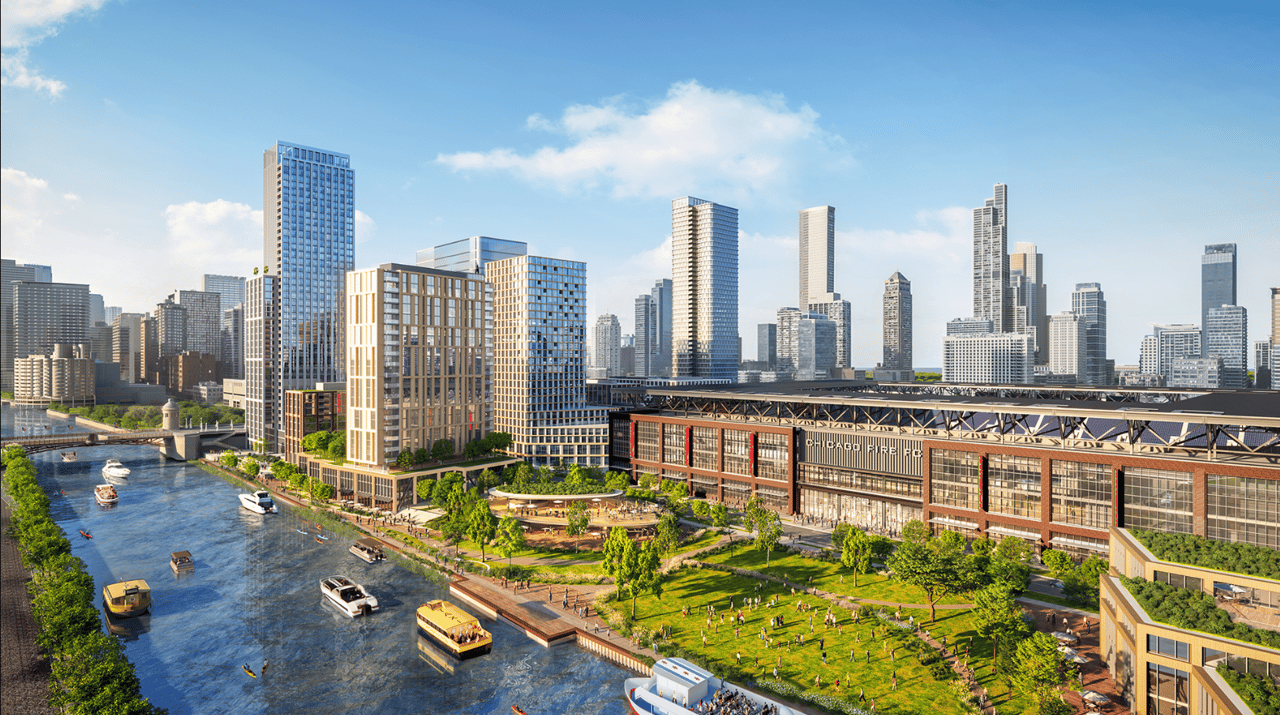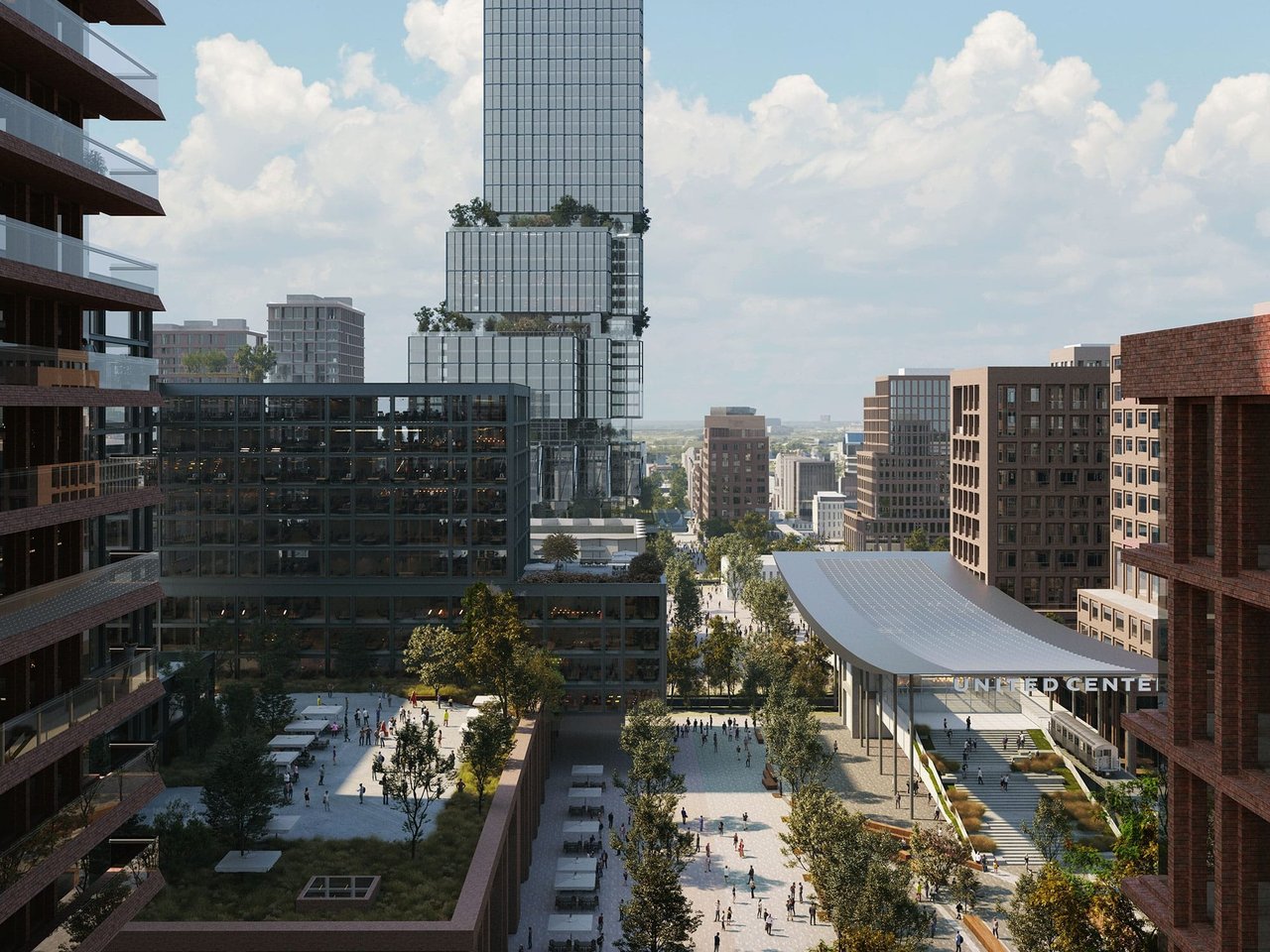
For years, the sea of parking lots surrounding the United Center has represented untapped potential in the heart of Chicago's West Side. Earlier this month, construction officially started on the $7 billion 1901 Project, an ambitious plan that will turn 55 acres of largely underutilized land into a vibrant mixed-use neighborhood complete with housing, hotels, entertainment venues, retail, public parks, and potentially a new CTA station. While the project will take years to fully realize, the groundbreaking represents a significant milestone, not just for the United Center, but for the future of Chicago's West Side.
What Is the 1901 Project?
At its core, the 1901 Project is far more than an expansion of the United Center campus. Led by the ownership groups of the Chicago Bulls and Chicago Blackhawks, the long-term vision is to create an entirely new neighborhood that remains active well beyond game days and concert nights. Current plans call for approximately 9,500 residential units, including nearly 1,900 affordable homes, more than 1,300 hotel rooms, millions of square feet of commercial space, new entertainment venues, parks, plazas, and improved transit connections. The project is expected to be built in phases over the next 15 years, gradually reshaping a significant portion of the Near West Side.
The reason this project has captured so much attention is that it represents more than new construction. It reflects the continued evolution of Chicago's West Side. Over the past two decades, we've watched investment move steadily west from downtown. Fulton Market transformed from a largely industrial district into one of the city's most sought-after neighborhoods. The West Loop followed with new residential towers, restaurants, offices, and public investment. Now, many are asking whether the area surrounding the United Center could be the next chapter in that story. While no two neighborhoods evolve in exactly the same way, projects of this scale have a way of influencing where people choose to live, work, and invest for years to come.
While nobody can predict exactly how a neighborhood will evolve, it's difficult to overstate the significance of a $7 billion investment on Chicago's West Side. Developments of this magnitude are rare, and they often become defining moments in a neighborhood's history. The 1901 Project has the potential to strengthen the connection between the Near West Side, West Loop, Fulton Market, and West Town while attracting residents, businesses, visitors, and investment to an area that has long been defined by event traffic rather than everyday neighborhood activity.
What Is Being Built First?
While the full vision for the 1901 Project stretches well into the next decade, the first phase is already taking shape. Construction has begun on a new 6,000-seat music venue at the southwest corner of the site near Damen Avenue and Adams Street, along with a parking structure wrapped in retail and community-oriented space. These initial buildings may seem modest compared to the project's long-term scope, but they serve an important purpose: creating activity and momentum. Much like the early developments that helped redefine Fulton Market years ago, these first investments establish a foundation for the residential, commercial, hospitality, and public space components that will follow.
Why West Town Homeowners Should Pay Attention
For homeowners in West Town, Ukrainian Village, East Village, and the surrounding neighborhoods, this is a project worth paying close attention to. Major developments don't just transform the land within their boundaries. They often influence the areas around them as well. As new residents, visitors, businesses, and employers are drawn to the area, neighboring communities typically benefit from increased visibility and investment. More people exploring the area can lead to greater demand for local restaurants, shops, services, and housing.
One of the most intriguing pieces of the plan may also be the one receiving the least attention today: the proposed new CTA Pink Line station. While the music venue and new buildings will be the most visible signs of progress, improved transit access could ultimately have the greatest long-term impact on the surrounding neighborhoods. Easy access to public transportation has historically been one of the strongest drivers of residential demand in Chicago, making communities more attractive to residents, employers, and retailers alike. If the new station becomes a reality, it would create a stronger connection between the United Center district, downtown, and the neighborhoods that surround it, further integrating this area into the city's broader growth corridor.
Of course, projects of this scale don't come without challenges. Construction is expected to continue for many years, bringing periodic disruptions, increased traffic, road closures, and the inevitable growing pains that accompany major development. There are also open questions about how the market will absorb thousands of new residential units over time and how infrastructure will keep pace with the area's growth. While these concerns are worth monitoring, they are also a reflection of the project's extraordinary scale. The transformation of 55 acres into an entirely new neighborhood was never going to happen overnight, and the true impact of the 1901 Project will likely be measured over decades rather than years.
Looking Ahead
For homeowners, the most important question is often the simplest: Will this matter to my property's value? While no one can predict future appreciation, history suggests that major investments in housing, transit, infrastructure, parks, and commercial development can have a meaningful impact on how neighborhoods are perceived by buyers. A $7 billion investment doesn't guarantee higher values, but it does put a spotlight on an area in a way few projects ever do.
The 1901 Project is still in its early stages, and many details will continue to evolve in the years ahead. But one thing is clear: developments of this magnitude are rare. As the project takes shape, it has the potential to strengthen the connection between the Near West Side, West Loop, Fulton Market, and West Town while bringing new residents, businesses, and amenities to Chicago's West Side.
Curious what developments like the 1901 Project could mean for your home, or your neighborhood? As local experts who live and work in West Town and the surrounding communities every day, we closely track the trends, developments, and investments shaping the future of Chicago's West Side. If you'd like to discuss your home's value, future opportunities in the area, or what we're seeing in today's market, we'd love to share our perspective.