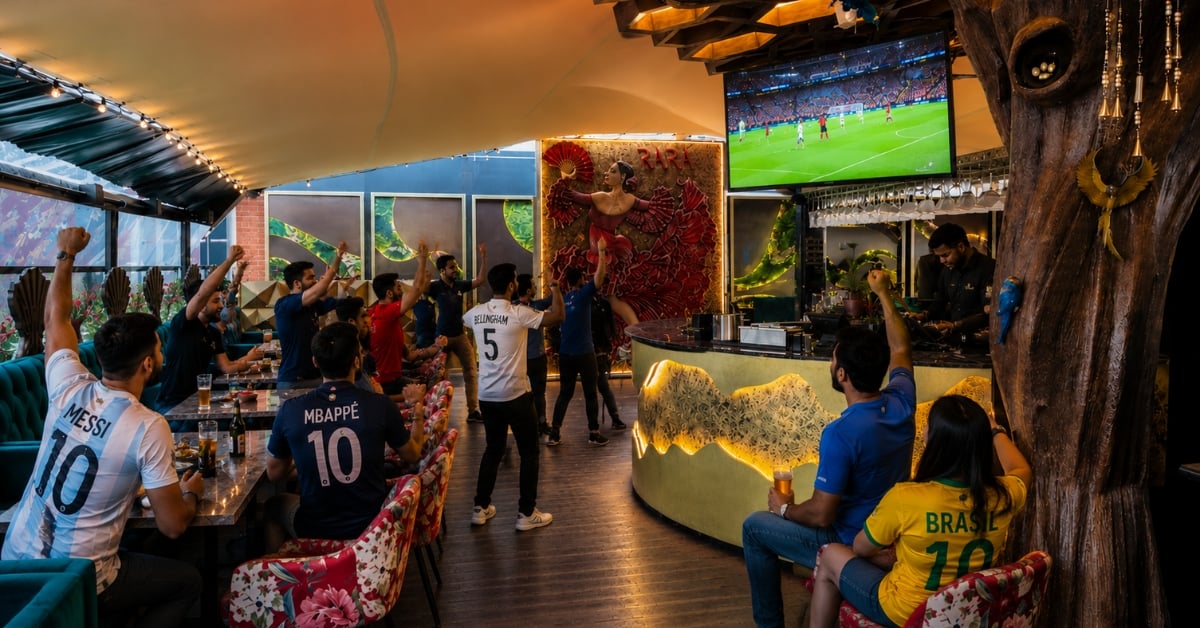
There's a particular kind of magic that happens when a city falls for something all at once. Walk into River North, Fulton Market, or the West Loop on a weekday afternoon this summer, and you'd swear it was Saturday night. Tables are wrapped in vinyl soccer-field covers. Jumbotrons tower over patios. And the crowds, thousands of them, dressed in flags and jerseys, aren't waiting for happy hour. They're waiting for kickoff.
Chicago isn't a World Cup host city this year. But you'd never know it from the restaurant reservation books.
A City That Wasn't Supposed to Be This Loud
When the 2026 FIFA World Cup kicked off on June 11 , the tournament's first return to U.S. soil since 1994, most of the spotlight went to the sixteen official host cities scattered across the U.S., Mexico, and Canada. Chicago didn't make that list. And yet, for the better part of six weeks, it's felt like one of the liveliest soccer towns in the country.
River North's Tree House, normally dark on Wednesdays, found itself packed with 1,500 fans for a Mexico match the team had already clinched. Its sister restaurant, Moe's Cantina, hit capacity right alongside it. Tree House's ownership group reported revenue up 71% in a two-week stretch compared to the period before, with sister restaurant Moe's up 55% the first time either had opened for lunch since before the pandemic.
Fulton Market's Recess told a similar story, only louder. As the official watch-party host for the Chicago Fire, the restaurant transformed its nearly 1,000-person patio and event space into something closer to a stadium concourse than a bar. By late June, customer counts there were already running nearly 300% ahead of a typical year. By early July, as the knockout rounds intensified, Block Club Chicago found fans lining up outside Recess before 9 a.m. for matches that didn't start until later, some waiting up to three hours for a walk-in seat. CBS Chicago's cameras caught the same scene on the night of the USA-Belgium match, with the restaurant crowded since early afternoon, hours before kickoff.
More Than a Bar Crowd - A New Customer Base
What's striking isn't just the volume. It's who's showing up. Restaurant operators around the city describe out-of-town visitors driving in from the Midwest specifically to watch games in Chicago, and international travelers stopping through en route to matches elsewhere, treating the city as a soccer waypoint rather than a final destination. Concierge requests at some restaurant groups have reportedly spiked to unusual levels, with hotel guests asking to be pointed toward the best spot to catch a match.
Neighborhood spots have leaned in just as hard as the big hospitality groups. Around the city, restaurants like BienMeSabe in Ravenswood built out full World Cup menus alongside their screenings, while soccer-dedicated newcomer Soccer House opened in West Town just in time for the tournament, betting that Chicago's appetite for the sport would outlast this summer entirely. German cultural hub Dank Haus, Argentine spot Barra Ñ, and Korean favorite Tak Korean Bistro have all hosted watch parties tied to their respective national teams, a reminder of just how many of Chicago's neighborhoods have a personal stake in this tournament.
Even fast-casual chains have felt it. One international chicken chain's Chicago-area locations saw loyalty sign-ups jump from a few hundred a week to several thousand in a single week after a jersey-day promotion new customers the brand hopes to keep well past the final whistle.
Why This Matters Beyond the Final Whistle
For restaurant owners, the appeal isn't just the short-term windfall, though a revenue jump of 50-70% in a matter of weeks is nothing to shrug at, especially with operating costs elevated across the industry. It's the introduction. Thousands of people who might never have wandered into River North on a Tuesday afternoon or discovered a Fulton Market patio are doing exactly that, and coming back once the group stage specials end. It's a citywide open house, six weeks long, with the whole world walking through the door.
That's the same instinct, really, that makes a great neighborhood worth buying into. The energy on the patio at Recess this month, the lines outside Tree House, the flags hanging from a River North ceiling - it's not a fluke. It's Chicago doing what it always does when given a reason: showing up, all in, together. The World Cup wraps on July 19. The reservations this city has built along the way won't.
Curious which Chicago neighborhoods are drawing the kind of energy and investment worth paying attention to? That's exactly the conversation I love having with my clients. Reach out anytime.