If you are looking for a Chicago neighborhood where small multifamily investing still makes structural sense, Logan Square deserves a close look. Between its large share of two-, three-, and four-unit buildings, strong renter presence, and transit-centered layout, it offers a setup that many investors want but cannot easily find in more condo-heavy areas. This guide will help you understand what makes Logan Square different, where buyers need to be careful, and how to evaluate a deal with more confidence. Let’s dive in.
Why Logan Square Fits Small Multifamily
Logan Square is about five miles northwest of the Loop and has long been shaped by Milwaukee Avenue, transit access, and walkable residential blocks rather than a purely car-oriented pattern. According to the Chicago Public Library’s Logan Square community overview, that corridor history still helps explain how the neighborhood functions today.
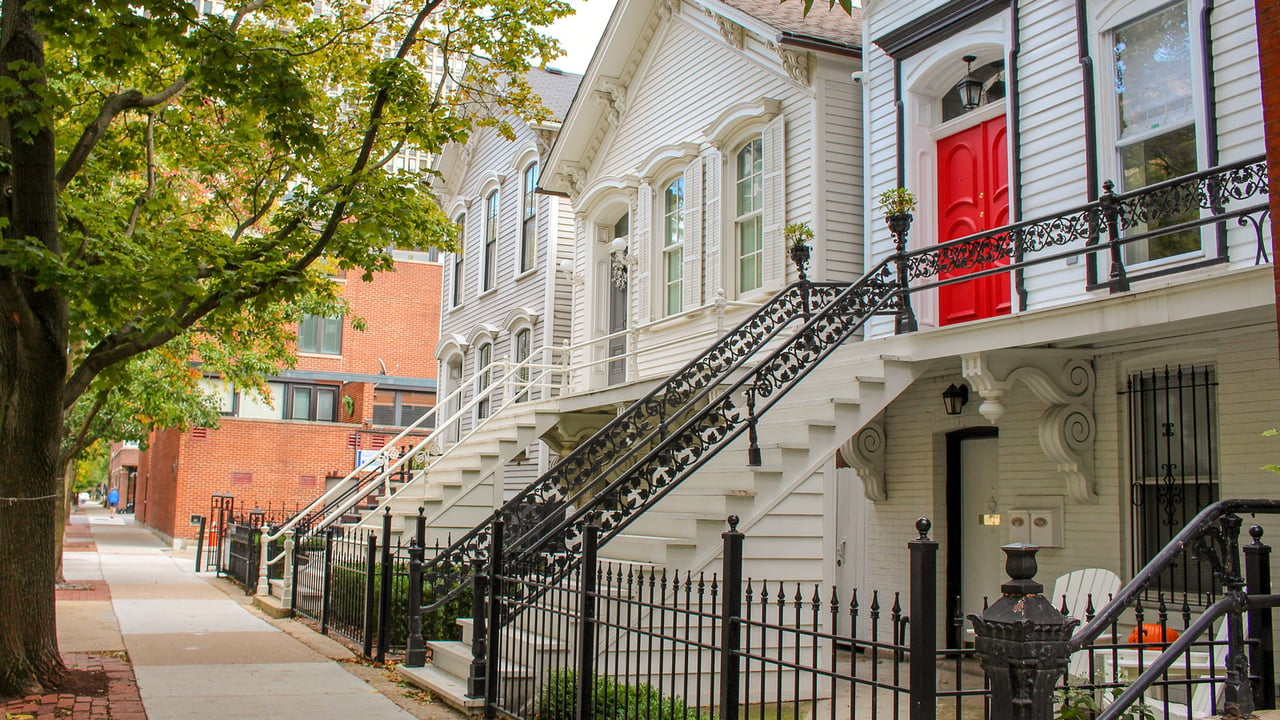
For investors, the biggest story is the housing mix. A CMAP community data snapshot for Logan Square shows that 17.1% of housing is in two-unit buildings and 27.3% is in three- or four-unit buildings. Combined, roughly 44% of Logan Square’s housing stock sits in the 2-4 unit category, which is far above the citywide share of 28.1%.
That matters because small multifamily is not a niche product here. It is a meaningful part of the neighborhood’s built environment, which gives buyers a deeper pool of opportunities and more relevant comps when comparing buildings.
Logan Square Renter Demand
The demand story is just as important as the building count. CMAP reports that 62.3% of occupied homes in Logan Square are renter-occupied, with a median age of 33.1 and 39.5% of residents between ages 20 and 34.
Those numbers do not guarantee performance for any single building, but they do support the idea that Logan Square has a strong base of rental demand. For investors buying a two-flat, three-flat, or four-flat, that renter-heavy profile is one reason the neighborhood stays on the radar.
The transportation pattern also supports rentability. About 74% of households have no car or one car, 23.2% of workers commute by transit, and 28.1% work from home, according to CMAP. That mix points to a tenant base that often values access, layout, and neighborhood convenience over suburban-style parking-heavy living.
What Buildings Look Like Here
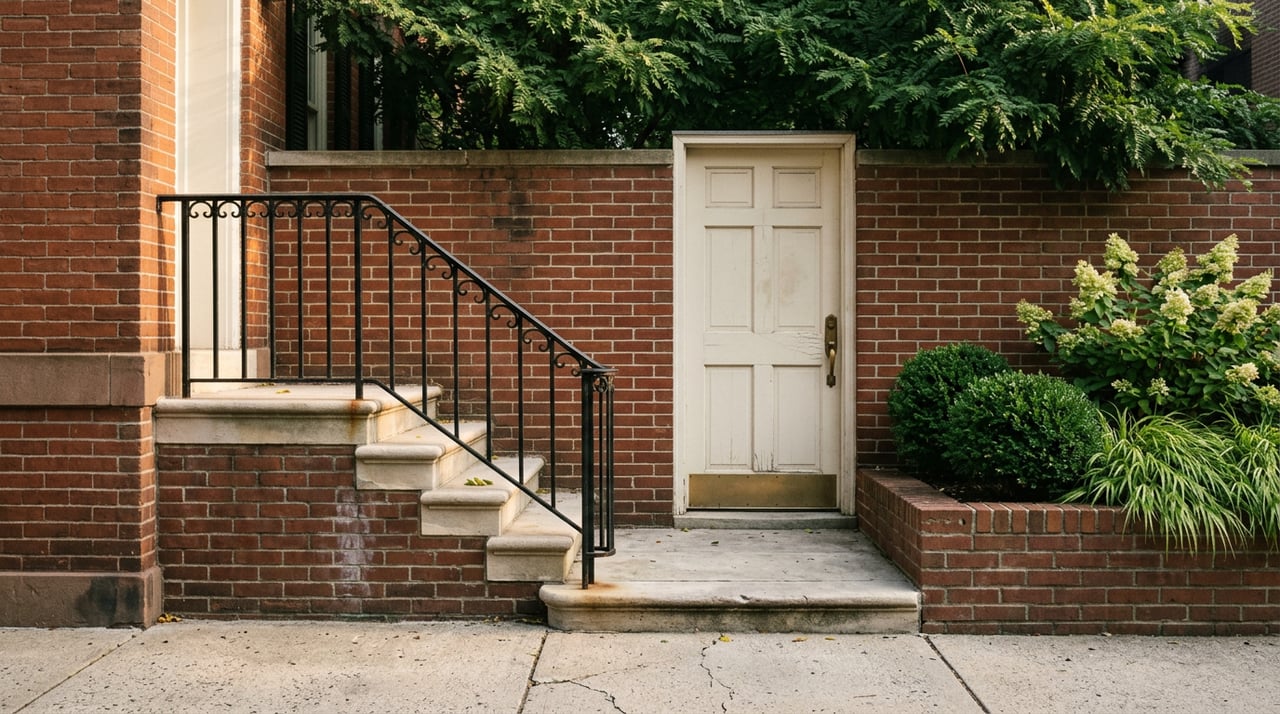
Logan Square’s small multifamily stock tends to be older and more practical in layout than many buyers expect. CMAP shows that 60.2% of housing units were built before 1940, with a median year built of 1932.
That age profile affects both opportunity and risk. Older buildings can offer architectural character, larger room counts, and value-add potential, but they also require more careful inspection and a realistic renovation budget.
The unit mix is also worth noting. In Logan Square, 39.6% of units have two bedrooms and 24.4% have three bedrooms, while the median unit has 5.3 rooms. For investors, that often means the typical two-flat or three-flat is geared toward households seeking more usable space, including roommates, families, or longer-term renters.
Block Location Matters
In Logan Square, the neighborhood name alone is not enough to judge a deal. Exact block position can change renter appeal, renovation strategy, and long-term upside.
Transit is central to that equation. The CTA Blue Line provides 24-hour service between O’Hare and Forest Park, and the Logan Square station connects with bus routes 56 and 76. Nearby service also includes routes 73 Armitage and 74 Fullerton.
Because the neighborhood is organized around a mix of housing, retail, and transit, buildings closer to Milwaukee Avenue, the Blue Line, and major cross streets like California, Armitage, and Fullerton often draw wider renter interest. That is not a fixed pricing rule, but it is a useful way to think about demand when comparing one block to another.
Historic Character and Pricing
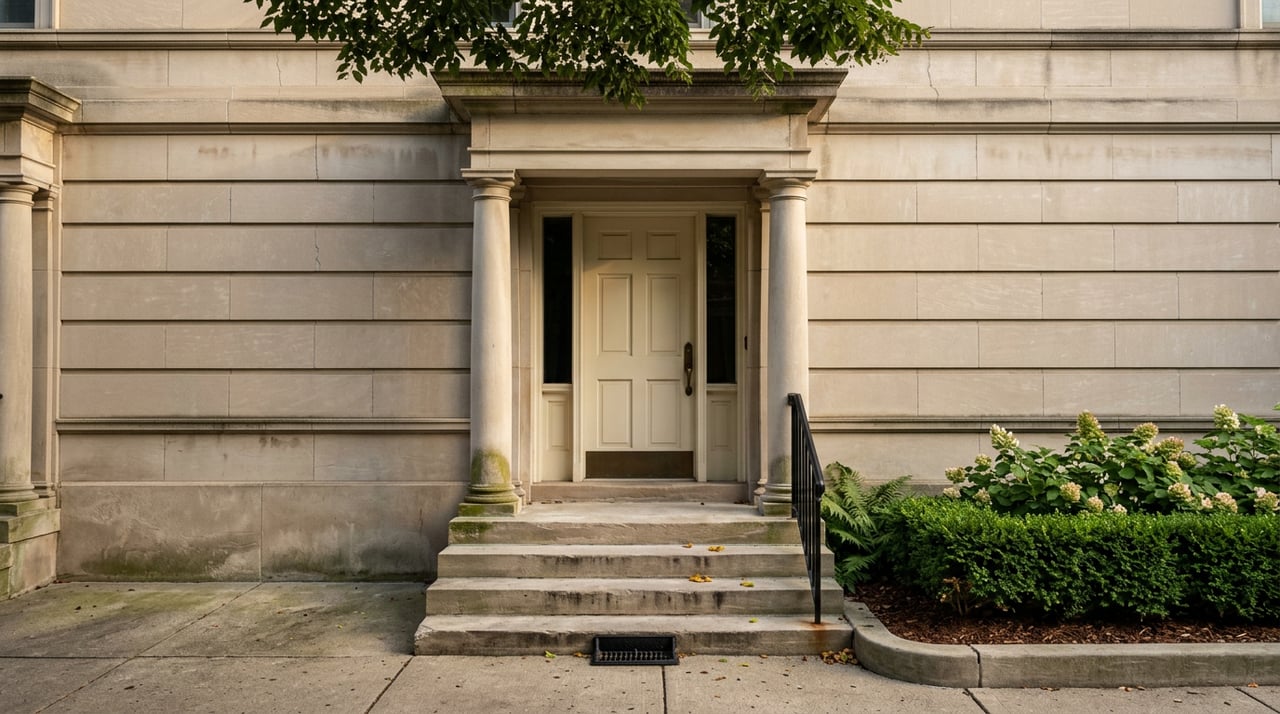
Character can influence value in Logan Square more than raw unit count alone. The neighborhood includes notable historic streetscapes, and Logan Boulevard is part of a National Historic District known for graystone homes.
For buyers, that means curb appeal, building style, and streetscape context may shape pricing alongside rent potential. Two buildings with the same number of units can perform very differently in buyer interest depending on condition, block feel, and architectural presence.
This is one reason investors should look beyond a spreadsheet. The best purchase is not always the building with the highest advertised income. Sometimes it is the property with the stronger block position, more flexible layout, or more manageable renovation path.
Due Diligence for Vintage Buildings
Because so much of Logan Square’s housing stock predates 1940, due diligence should be thorough from day one. Cosmetic updates alone rarely tell the full story in a vintage small multifamily building.
Common practical inspection points include:
- Roof condition
- Masonry and tuckpointing
- Windows
- Porches
- Basement moisture
- Electrical capacity
- Plumbing condition
- Unit separation and egress issues
These are not unique to Logan Square, but they are especially relevant in a neighborhood where pre-war buildings make up such a large share of the inventory. A clean kitchen renovation does not eliminate the need to understand the building systems behind the walls.
Renovation Rules to Plan For
Older housing also means buyers need to think carefully about compliance and timing. Because many properties were built before 1978, renovation work may trigger lead-safe requirements.
The CMAP Logan Square snapshot notes the relevance of EPA rules for pre-1978 housing. Renovation, repair, or painting in those buildings can create lead dust, and covered work must follow the Lead Renovation, Repair and Painting rule.
Permits are another major part of underwriting. The City of Chicago uses its Inspection, Permitting & Licensing Portal to apply for and manage permits and trade licenses, including categories tied to renovation, electrical work, and porches.
For investors, the takeaway is simple: budget for more than finishes. You should also account for permit timelines, contractor coordination, inspections, and the possibility that older work may uncover additional issues once a project begins.
What to Confirm Before You Buy
A Logan Square multifamily purchase usually works best when you verify the basics early. Small issues that seem manageable during a showing can become expensive once you are under contract.
Use this checklist as a starting point:
- Confirm the legal unit count.
- Review whether any basement or garden space needs separate legality review.
- Check whether utilities are separately metered or could be separated without major disruption.
- Budget for permit-driven work and long-cycle capital expenses before assuming a cosmetic value-add plan will pencil.
- Evaluate renter appeal based on transit access and corridor position, not just the Logan Square label.
- Decide whether the plan is owner-occupant plus rental income, a long-term hold, or a value-add project with refinancing later.
This kind of upfront clarity can help you compare deals more accurately. It also makes it easier to separate true opportunity from properties that only look attractive on a surface-level tour.
How Logan Square Compares Nearby
Logan Square stands out because it is far more small-multifamily oriented than some nearby North Side markets. In Lincoln Park’s CMAP snapshot, only 3.7% of housing is in two-unit buildings and 14.1% is in three- or four-unit buildings, while 43.4% is in buildings with 20 or more units.
That is a very different setup from Logan Square, where 2-4 flats play a much larger role and large buildings make up a smaller share of the housing stock. For investors specifically targeting classic Chicago small multifamily, Logan Square often presents a more natural fit.
Compared with West Town, Logan Square has a similar overall share of 2-4 unit housing, but its stock is older. West Town has a median year built of 1961, while Logan Square’s median year built is 1932.
That difference matters. Logan Square may offer more vintage-building character and renovation upside, but buyers should also expect more age-related capital planning and closer attention during inspections.
A Smarter Investor Approach
The strongest Logan Square multifamily purchases are usually the result of disciplined filtering, not broad assumptions. You want to study the block, the unit mix, the age of the building, the likely rehab scope, and how the property fits your hold strategy.
For out-of-market and time-conscious buyers, that local perspective can be especially valuable. A building that looks similar on paper may have a very different renovation path or renter profile depending on where it sits and how it is configured.
That is where experienced guidance helps. If you are considering a Logan Square two-flat, three-flat, or four-flat, IKGroup can help you evaluate location nuance, compare opportunities, and approach the purchase with a more strategic lens.
FAQs
What makes Logan Square attractive for multifamily investors?
- Logan Square has an unusually high share of two-, three-, and four-unit housing, with about 44% of homes in 2-4 unit buildings, plus a renter-heavy population and strong transit access.
What should you inspect in a Logan Square vintage building?
- You should pay close attention to the roof, masonry, tuckpointing, windows, porches, basement moisture, electrical capacity, plumbing, and unit separation or egress issues.
What renovation issues matter in Logan Square multifamily properties?
- Because much of the housing stock was built before 1940, buyers should plan for permit timelines, possible lead-safe compliance in pre-1978 buildings, and age-related capital repairs beyond cosmetic updates.
What unit types are common in Logan Square small multifamily buildings?
- Logan Square housing often includes practical two-bedroom and three-bedroom layouts, which can appeal to households looking for more space than a typical one-bedroom rental.
What should investors verify before buying a Logan Square two-flat or three-flat?
- Investors should confirm the legal unit count, review basement or garden legality, check utility metering, estimate permit-driven work, and evaluate the block’s transit and corridor access.
How is Logan Square different from Lincoln Park for multifamily investing?
- Logan Square has a much larger share of small multifamily housing, while Lincoln Park has a much higher share of larger 20+ unit buildings, making Logan Square more aligned with classic 2-4 unit investment strategies.