If your current home no longer fits how you live, Lincoln Square may be one of the smartest places in Chicago to make your next move. Many move-up buyers want more space, better daily convenience, and a neighborhood that still feels connected to the city. In Lincoln Square, you can find a mix of housing options, strong transit access, and everyday amenities that support a more comfortable routine. Let’s dive in.
Why Lincoln Square stands out
Lincoln Square offers a combination that can be hard to find in Chicago: established neighborhood character, practical housing variety, and a location that supports both city living and changing household needs. For buyers who are ready to move up, that matters.
The neighborhood has 41,673 residents and 19,670 households, with a median age of 36.2. Its population is concentrated in the working years, with 28.0% of residents between 20 and 34 and 26.6% between 35 and 49. That age profile helps explain why so many buyers see Lincoln Square as a place where they can grow without leaving the city behind.
Lincoln Square also reflects the kind of buyer who often wants to upsize. Median household income is $93,606, and 27.9% of households earn $150,000 or more. The area includes one-person, two-person, and larger households, which points to a neighborhood that works for professionals, couples, and households looking for more room.
Housing options fit different upgrade goals
One reason move-up buyers choose Lincoln Square is that the housing stock is not one-note. Instead of a neighborhood dominated by just one property type, Lincoln Square offers a broad mix of homes and building styles.
Detached single-family homes make up 14.8% of housing units. Two-unit buildings account for 13.6%, while three- or four-unit buildings make up 20.7%. Buildings with five to nine units represent 22.0%, ten to 19 units make up 11.1%, and 20+ unit buildings account for 15.7%.
That mix gives you more than one path to a move-up purchase. You may be looking for a larger condo with better layout and storage, or you may want a single-family home with more private living space. In Lincoln Square, both options can be part of the conversation.
Vintage housing adds character and complexity
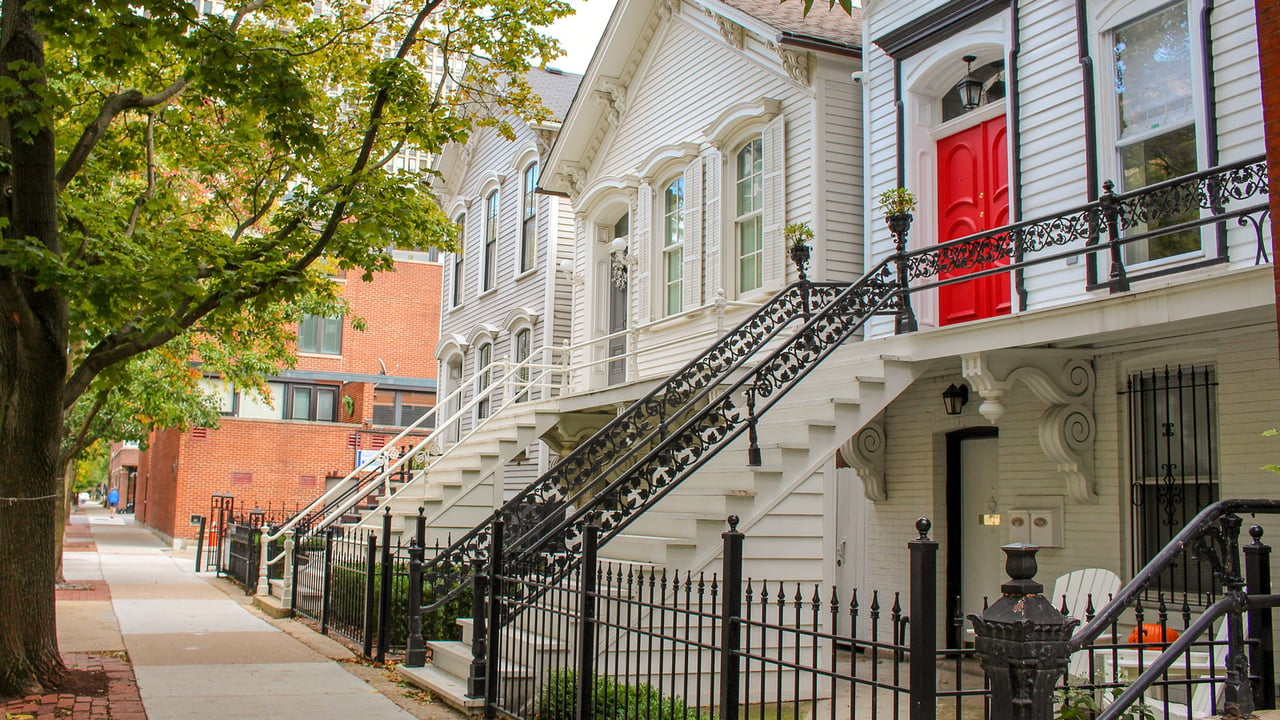
Lincoln Square is also known for its older housing stock. The median year built is 1942, and 48.4% of homes were built before 1940. Only 4.2% of housing was built in 2010 or later.
For many buyers, that is part of the appeal. Older homes often offer the classic Chicago feel that newer inventory cannot easily replicate. At the same time, a neighborhood with limited new construction usually requires a more focused search, especially if you want updated finishes, a certain floor plan, or more turnkey condition.
The market is desirable and competitive
Lincoln Square is not just appealing on paper. It is also competitive in real time, which is important for move-up buyers trying to balance a sale and a purchase.
As of April 2026, there were 75 homes for sale in Lincoln Square, with a median listing price of $589,000. Median days on market stood at 25, and the sale-to-list ratio was 104%. Realtor.com identifies the neighborhood as a seller’s market.
In practical terms, that means well-positioned homes can move quickly. If you are moving up in Lincoln Square, timing matters. So does preparation.
Transit makes daily life easier
Move-up buyers are not only shopping for square footage. You are also buying into a daily routine, and Lincoln Square performs well on that front.
CTA Brown Line service includes the Montrose, Damen, Western, and Rockwell stations. The neighborhood also benefits from the Ravenswood Metra station on the Union Pacific North line. That rail access can be especially useful if you split time between downtown, neighborhood errands, and a hybrid work schedule.
The commuting data reinforces that flexibility. In Lincoln Square, 23.9% of workers commute by transit, 25.0% work from home, 23.2% of households have no vehicle, and 53.1% have one vehicle. Those numbers suggest the neighborhood works well whether you are car-light, commuting regularly, or simply trying to reduce friction in everyday life.
Parks support more room to live
For many move-up buyers, “more space” does not only mean inside the home. It also means easier access to places where you can spend time outdoors, stay active, or enjoy a more comfortable weekly rhythm.
Welles Park sits in the heart of Lincoln Square at Lincoln and Montrose and spans 15.84 acres. Amenities include an indoor pool, fitness center, tennis and pickleball courts, an accessible playground, and multiple fields. That kind of park access can add real value to your day-to-day experience.
Winnemac Park covers 22.38 acres and includes an accessible playground, a nature trail, softball fields, a soccer field, and school-park programming tied to nearby schools. Together, these parks help explain why Lincoln Square appeals to buyers who want more room to live without giving up a city setting.
Walkability adds everyday value
Lincoln Square also offers the kind of daily convenience that can make a move-up purchase feel worthwhile long after closing day. The neighborhood is known for independent shops, breweries, restaurants, and regular community activity.
Its farmers market brings 50+ local vendors to 2301 W Leland Avenue on Tuesday mornings and Thursday afternoons, next to the Western Brown Line stop. For buyers, that speaks to more than atmosphere. It points to a neighborhood where errands, dining, and small routines can feel easier and more connected.
Why move-up buyers see long-term fit
Lincoln Square works for buyers who want to improve how they live, not just where they sleep. The neighborhood offers a rare mix of established housing, transit convenience, local commercial activity, and access to green space.
It also serves a range of household sizes. While 39.2% of households are one-person households and 33.7% are two-person households, 13.6% are households of four or more people. That balance supports the idea that Lincoln Square can meet your needs now and still make sense as life changes.
How to plan your move-up purchase
In a competitive neighborhood, a move-up plan should start before you tour homes. That is especially true if you need to coordinate the sale of your current property with the purchase of your next one.
A preapproval letter is one of the most useful early steps. The Consumer Financial Protection Bureau notes that sellers often require preapproval before accepting an offer, and that these letters commonly expire in 30 to 60 days. In a fast-moving market like Lincoln Square, having updated financing in place can help you act quickly when the right home appears.
Just as important, use your preapproval as a planning tool, not a reason to stretch beyond what feels sustainable. A larger home can improve your lifestyle, but the best move-up purchase is one that supports both your goals and your comfort level.
Focus on the right upgrade
Not every move-up buyer wants the same thing. Some want an extra bedroom, better outdoor space, or a more functional kitchen. Others want to stay in the city while shifting into a home that better supports work-from-home needs, entertaining, or a more flexible layout.
In Lincoln Square, clarity matters because inventory is limited and housing types vary. When you define the upgrade you truly need, you can evaluate listings with more discipline and avoid chasing homes that look appealing but do not solve the right problem.
A strategic approach matters in Lincoln Square
Because Lincoln Square combines older housing, limited new inventory, and seller’s-market conditions, the best results usually come from a thoughtful strategy. That includes setting a realistic budget, preparing financing early, and aligning your sell-to-buy timeline before the pressure of a live listing search sets in.
For move-up buyers, this is where experienced guidance can make a meaningful difference. A concierge approach, strong local knowledge, and disciplined transaction management can help you evaluate options, move decisively, and protect value on both sides of the transaction.
If you are thinking about making your next move in Lincoln Square, IKGroup can help you plan the transition with clarity, strategy, and a more tailored buying and selling experience.
FAQs
Why is Lincoln Square attractive for move-up buyers?
- Lincoln Square offers a broad mix of housing types, strong rail access, established neighborhood character, local retail, and major parks that support a more spacious and convenient city lifestyle.
How competitive is the Lincoln Square housing market?
- As of April 2026, Lincoln Square had 75 homes for sale, a median listing price of $589,000, median days on market of 25, and a 104% sale-to-list ratio, which reflects seller’s-market conditions.
What types of homes can you find in Lincoln Square?
- The housing stock includes detached single-family homes, two-unit buildings, mid-size multifamily buildings, and larger condo buildings, giving buyers several ways to move up depending on space and lifestyle goals.
Is Lincoln Square convenient for commuting in Chicago?
- Yes. The neighborhood is served by CTA Brown Line stations at Montrose, Damen, Western, and Rockwell, plus the Ravenswood Metra station, which supports both regular commuting and hybrid work routines.
What should move-up buyers do before shopping in Lincoln Square?
- Start by defining the space upgrade you actually need, getting preapproved before serious home shopping, and coordinating the timing of your current home sale with your next purchase.