Thinking about selling your River North luxury condo and want a clear plan, not guesswork? You are not alone. High-rise sales in this neighborhood reward careful timing, precise pricing, and polished marketing. In this guide, you will see the full timeline from prep to closing, plus strategies that attract qualified buyers and protect your value. Let’s dive in.
River North luxury market at a glance
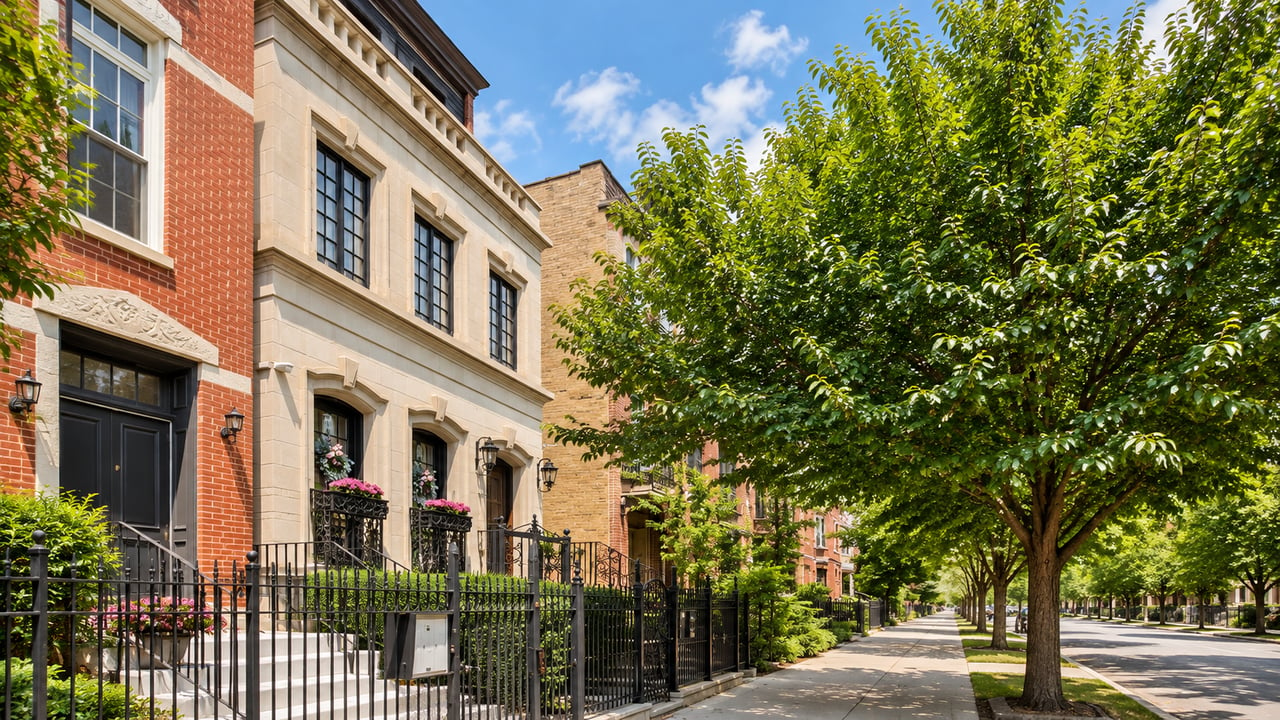
River North is one of Chicago’s flagship high-rise condo markets. You see a mix of newer luxury towers, conversion lofts, and boutique high-rises clustered near the river, Chicago Avenue, and the Merchandise Mart. Views, finishes, amenities, and floor plans vary widely, which is why pricing is not one-size-fits-all.
Your most likely buyers include:
- Local executives and professionals who work downtown.
- Empty nesters seeking a lock-and-leave condo with strong amenities.
- Relocation and corporate buyers moving for work.
- National and international buyers targeting trophy units with skyline or river views.
Seasonality matters. Spring often brings the most activity in Chicago, while winter can be slower. That said, motivated luxury buyers remain active year-round for well-prepared listings. Before you list, review recent building comps, price per square foot trends, days on market, sale-to-list ratios, and competing inventory so your strategy fits current conditions.
A realistic sale timeline
A successful River North sale follows a predictable arc. Here is what a typical timeline looks like and how to stay ahead of it.
Weeks -6 to -2: Strategy and prep
Start with a detailed plan. Meet with a local luxury agent, confirm your pricing approach, and define the target buyer profile. In parallel, begin the technical work that can slow deals if you leave it to the last minute.
Key tasks:
- Order association documents and the estoppel or resale certificate. Some buildings need 2 to 3 weeks.
- Gather utility bills, tax and assessment details, warranties, recent inspection reports, and any notices about assessments or building projects.
- Decide on high-ROI updates like paint, hardware, lighting, minor flooring or kitchen and bath touch-ups. These polish the presentation without over-investing.
Weeks -2 to 0: Stage and produce media
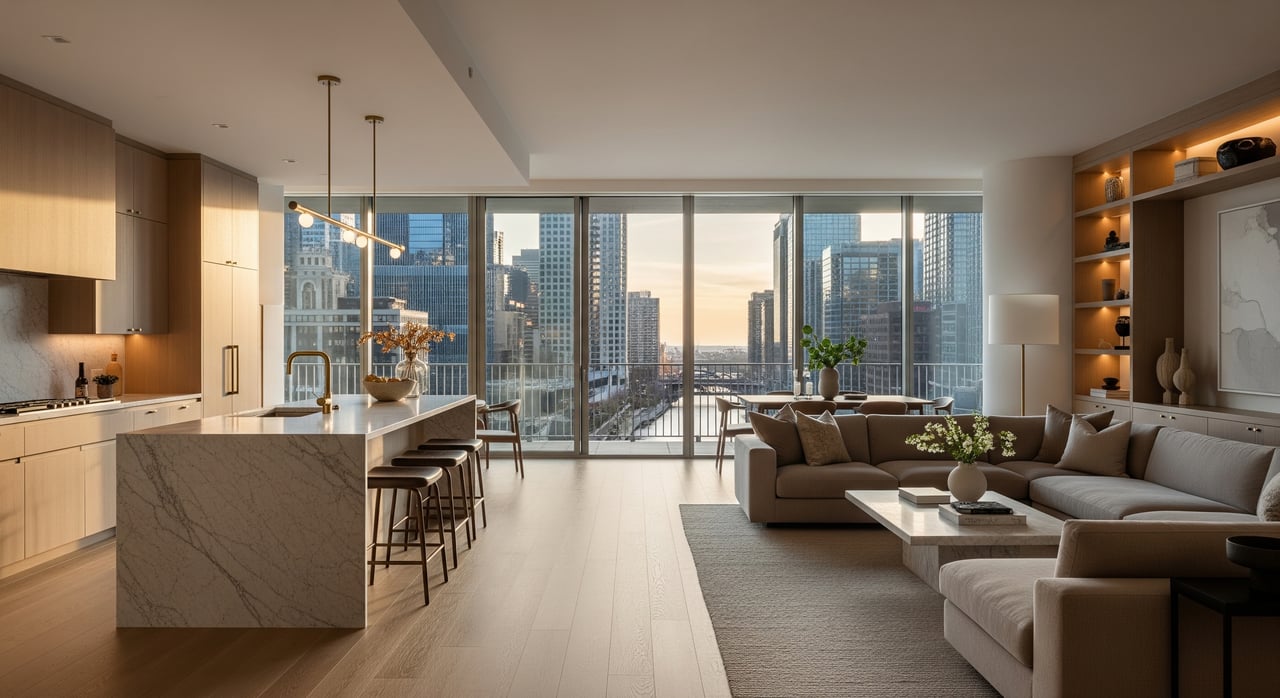
Professional staging is a big lever in the luxury segment because it shows scale, light, and lifestyle. Add high-resolution photography, a floor plan with accurate square footage, and either a 3D walkthrough or a high-quality video tour. If allowed, drone exterior and neighborhood footage helps buyers connect with the setting.
Week 0: Launch for maximum impact
Your first two weeks on market are critical. Roll out the MLS listing with complete materials, syndicate to luxury channels, and run pre-arranged digital campaigns. A broker open can drive early agent exposure. If you expect strong interest, consider an offer review date to manage momentum.
Weeks 1 to 6: Showings and negotiation
Focus showings on qualified buyers. For financed buyers, request solid jumbo pre-approval. For cash, request proof of funds. Track interest and feedback, prepare for one or more rounds of negotiation, and weigh more than price alone. Terms like appraisal, inspection, and closing date often decide the winner.
Contract to close: 30 to 60 days
Most luxury condo sales close in 30 to 60 days once under contract. During this period, buyers review association documents, complete inspections, and finalize financing and appraisal. Keep communication tight between attorneys, lenders, and building management to keep the file moving.
Condo-specific timing factors
- Association estoppel or resale certificate turnaround and fees.
- Building policies for showings, guest access, and elevator reservations for moves.
- Parking and storage transfer rules or waitlists.
Smart pricing for River North condos
Pricing begins with the building. The best comps are recent sales in the same building and, if possible, the same floor plan. If none are available, use close matches in nearby River North buildings and adjust carefully.
What to adjust for:
- Floor and exposure, including skyline or river views.
- Balcony or terrace size and condition.
- Interior upgrades, recent renovations, and overall finish level.
- HOA fees and assessments, since buyers compare total monthly carrying costs.
Choose a strategy that fits today’s demand:
- Market-value listing. Price at current market to generate strong early activity and increase the odds of multiple offers.
- Value-based listing. List slightly below market to attract competition. This can work, but be mindful of appraisal risk if financing is involved.
- Premium pricing. Reserve this for unique or trophy units where superior marketing and rare attributes justify a higher ask.
Current dynamics to plan for:
- Jumbo financing and mortgage rates affect buyer reach at higher price points. Many luxury buyers pay cash, but financed buyers may include appraisal and financing contingencies.
- Appraisals can lag fast-changing pricing. Decide in advance how you will handle an appraisal gap, whether through price adjustments, buyer coverage of the gap, or other terms.
- Inventory sets your leverage. If competing luxury inventory is high, price competitively. If it is tight, you can be more assertive.
Key metrics to watch:
- Sale-to-list ratio for similar units.
- Average days on market for your building and close peers.
- Price per square foot trends over the past 3 to 12 months.
- Active and soon-to-market competition.
Marketing that reaches qualified buyers
In luxury, details and distribution sell. Your plan should present the property beautifully and push it to the right audience locally and globally.
Core must-haves:
- Complete MLS listing with compelling copy, professional photos, a floor plan, and a virtual or video tour.
- Twilight and exterior shots that highlight skyline and river views.
- 3D walkthrough or a high-quality video tour for remote and relocation buyers.
- A property microsite or digital brochure that showcases amenities, floor plans, and the neighborhood story.
Advanced luxury reach:
- Global distribution through a leading luxury brokerage network to access high-net-worth and international buyers.
- Geo-targeted digital advertising focused on the right demographics, including relocation and executive buyer segments.
- Broker-to-broker previews and private events for top-producing agents.
- International exposure and relocation outreach where appropriate.
Storytelling that sells:
- Connect the home to the lifestyle. Emphasize the Riverwalk, dining and cultural access, building amenities like concierge services, fitness, pool, and club rooms.
- Position the use case. For example, a lock-and-leave pied-a-terre, or a three-bedroom with panoramic views that supports everyday living and hosting.
Track what works. Monitor inquiries by source, showing volume, and online engagement so you can adjust the plan quickly if needed.
Offer terms, negotiation, and closing
You will evaluate more than price. In a luxury condo sale, strong terms often win.
What to scrutinize in offers:
- Financing and pre-approval strength for jumbo loans or proof of funds for cash.
- Appraisal contingency and the buyer’s plan for any gap.
- Inspection scope and repair requests. High-rise units often have fewer interior issues, but windows, balconies, and building systems can drive negotiations.
- Association document review, including bylaws, reserves, meeting minutes, and any pending litigation.
- Closing timeline aligned with financing and association paperwork.
Negotiation tactics that help sellers:
- If multiple offers arrive, set a clear review date and consider a best-and-final process.
- Compare non-price terms closely, such as closing date flexibility or rent-back options.
- Keep disclosures complete, especially for special assessments or building projects. Transparency prevents late-stage renegotiation.
Common friction points to get ahead of:
- Estoppel or resale certificate delays. Order early.
- Parking or storage transfer rules and fees. Clarify what conveys and the process.
- Move-in and move-out rules and elevator deposits. Share upfront to avoid surprises.
Closing costs and logistics:
- Expect to pay the broker commission, mortgage payoff, HOA transfer fees, and prorated taxes and assessments. Exact costs vary by building and contract.
- Coordinate with building management for elevator reservations, key and fob transfers, and mail or parking handoffs.
- Provide the buyer with manuals, warranties, and receipts to ensure a smooth handoff.
How to choose the right listing agent
Your agent should bring proven River North luxury experience, a strong broker network, and a marketing platform that reaches qualified buyers. Ask for specifics, not generalities.
Essential qualifications:
- Recent sales of luxury condos in River North with examples and comps.
- A complete marketing portfolio, including photography, video, microsites, and private events.
- Mastery of condo processes, estoppels, and building rules.
- A clear communication plan and a negotiation track record at higher price points.
Interview questions to ask:
- How many River North luxury condos have you sold in the past 12 to 24 months? May I see the marketing assets and closed prices?
- What is your pricing rationale for my unit, and how do you adjust for view, floor, and finishes?
- Which luxury and international channels will you use, and what is the budget and timeline?
- How will you qualify buyers and protect privacy during showings?
- How do you handle condo documents to avoid closing delays?
Red flags:
- No recent River North comps or incomplete luxury marketing.
- Unwillingness to provide references or a data-backed pricing plan.
- Pressure to accept an off-target price without support.
Your seller checklist
Use this quick list to stay organized and save time.
Documents and disclosures:
- Association bylaws, budget, reserves, meeting minutes, and any litigation notices.
- Estoppel or resale certificate and HOA transfer details.
- Recent utility bills, tax and assessment information, warranties, and any repair or inspection reports.
- Details on parking and storage transfer, plus any waitlists.
Property prep:
- Neutral paint, updated lighting, refreshed hardware, and minor flooring touch-ups.
- Professional cleaning, decluttering, and staging that fits the space and views.
Marketing assets:
- Professional photos, including twilight shots.
- Floor plan with accurate square footage.
- 3D walkthrough or video tour, and a digital brochure or microsite.
Go-live plan:
- Launch date aligned with target season and buyer travel patterns.
- Broker open, private previews, and targeted digital campaigns.
- Showing plan and qualification standards.
The bottom line
A top result in River North comes from strong prep, precise pricing, and distribution that meets high-end buyers where they are. Your goal is to make the unit easy to fall in love with and easy to buy. With the right plan, you can shorten time on market and protect your price.
Ready to map your timing, pricing, and marketing for your building and floor plan? Request a private consultation & home valuation with IKGroup for a tailored plan that fits your goals.
FAQs
How long does it take to sell a River North luxury condo?
- Many see peak activity in the first 2 to 4 weeks, then 30 to 60 days from contract to close, plus 2 to 6 weeks for pre-list prep.
When is the best time to list in Chicago?
- Spring is often the busiest, but serious buyers shop year-round. A well-prepped listing can perform in any season if pricing and marketing are aligned.
Do I need to stage a luxury condo before listing?
- Yes. Professional staging and high-quality visuals increase buyer engagement and can shorten time on market in the luxury segment.
How should I set price for a River North condo?
- Start with recent sales in your building and floor plan, then adjust for view, floor, upgrades, and HOA fees. Choose a strategy that matches inventory and demand.
What appraisal issues should I expect with a high-end condo?
- Appraisals can trail fast-moving prices. Decide in advance how to handle a possible gap, such as buyer coverage, a price change, or other terms.
What condo documents will buyers want to review?
- Association bylaws, budgets, reserves, meeting minutes, estoppel or resale certificate, and any notices of special assessments or litigation.