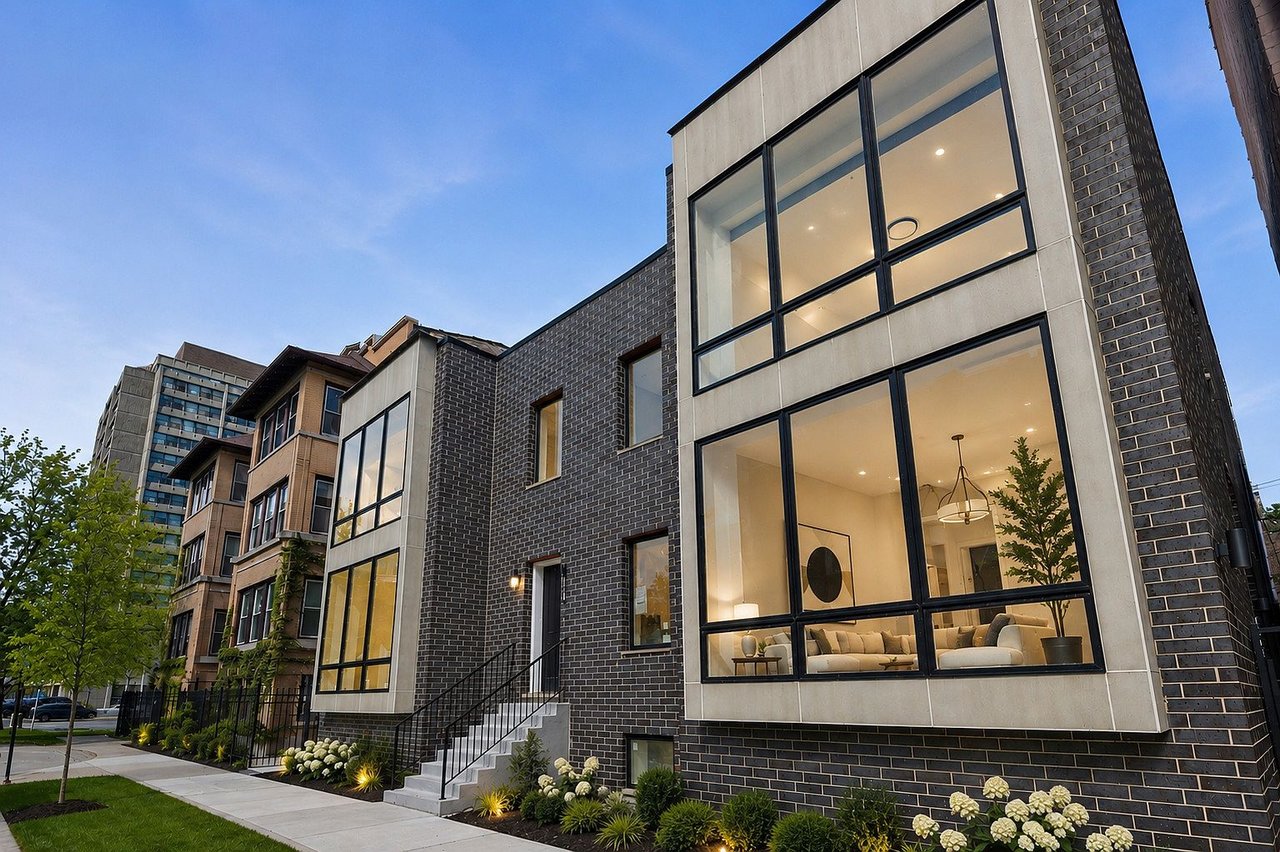
For decades, buying new construction meant paying a premium over an existing home. That rule has quietly broken down at the national level, but Chicago is one of the places where it still holds true, and by a wide margin. Here is what is driving the national shift, why Chicago is bucking it, and what that means if you are weighing new construction against resale here. Let's dive in.
The National Shift
For the fourth consecutive quarter, the median price of an existing home nationally ($404,600) came in higher than the median price of a new single-family home ($403,200), according to an NAHB analysis of U.S. Census Bureau and National Association of Realtors data from the first quarter of 2026. That is a real reversal. New homes carried a consistent price premium over existing ones from 2010 through most of 2020, and that gap widened again through 2024, before flipping in six of the last eight quarters. Chicago has not followed suit. Regionally, new homes in the Midwest still sold for about $66,800 more than existing homes in the same quarter, the opposite of the national pattern, and Chicago's own gap is far wider still.
Why Builders Are Undercutting Resale Prices, Just Not Here
Nationally, builders are actively engineering their way to lower price points rather than absorbing weaker demand. "They're trying to simplify the process in many ways," Cotality Chief Economist Selma Hepp said. "They're putting in fixtures and finishes that are much more affordable. They're using simpler floor plans, where builders come up with a book of floor plans and just offer those." More than a third of builders reported cutting prices nationally in June, with an average reduction of 6%. Chicago builders have less pressure to do the same. The metro ranks near the bottom among large cities for new home construction, and thin new supply means local builders are not competing against a glut of nearby new inventory the way builders are in faster-growing Sun Belt markets.
The Incentives Making New Construction More Competitive, Nationally and Locally
Beyond simplifying what they build, builders nationally are leaning hard on financial incentives that individual home sellers generally cannot match. About 62% reported using incentives such as mortgage rate buydowns or closing cost assistance, and buydowns specifically have gone from covering less than 10% of new-home sales historically to 70% to 80% of them today. Chicago builders offer similar buydowns, and local buyers also have city and state programs layered on top that are not available nationally. Chicago's HomeGrown Purchase Assistance Program, which launched in June 2026, provides grants of up to $70,000 toward down payments and closing costs in higher-cost Zone A neighborhoods like Lincoln Park and Lake View, and up to $50,000 in Zone B areas. The city's TaxSmart program offers an annual federal tax credit tied to mortgage interest, and Illinois' IHDAccess Home program adds up to $15,000 in assistance statewide for both new and existing homes. Stacking a builder's rate buydown with one of these programs can meaningfully close the gap that Chicago's sticker prices alone do not show.
What's Driving Up the Cost of Building New
Nationally, NAHB reports that regulatory costs now add an average of $131,734 to a new single-family home, about 26% of the average sales price, split between roughly $84,939 in construction-phase regulation and $46,795 tied to land development rules like zoning and site approvals. That figure has climbed more than 40% since 2021. Chicago adds its own layer on top of that national baseline: building costs in the city itself run an estimated $300 to $500 per square foot downtown, driven by dense zoning, permitting timelines, and premium land costs, compared to $250 to $350 per square foot in outlying areas like the northwest suburbs. Combined with thin supply, that cost structure is a big part of why Chicago new construction has not seen the same price softening playing out nationally.
The Long-Term Math: Lower Upkeep Costs
Sticker price is not the whole story anywhere, including Chicago. A Realtor.com study found new homes tend to carry a lower long-term financial burden thanks to lower energy costs and fewer repairs, with buyers of 10-year-old homes saving an average of about $25,000 compared to buyers of 20-year-old homes over time. That upside applies regardless of whether the upfront price gap is shrinking, as it is nationally, or holding steady, as it is here.
Just How Wide Is Chicago's Gap?
Wide. Chicago new construction has been running close to $889,000 against roughly $329,900 for resale homes, a premium far larger than the roughly break-even national figures suggest. Chicago's limited new-home pipeline is the biggest reason why. The city has consistently ranked near the bottom among large metros for new construction, and that scarcity has been a persistent driver of the city's overall price growth, with 2026 forecasts putting Chicago's price appreciation at roughly double the national average.
What This Means for Buyers
The takeaway depends entirely on where you are shopping. If you are reading national headlines, the old assumption that new construction always costs more no longer holds. In Chicago, it still does, and by a meaningful amount, so the calculation should lean more heavily on incentives than on hoping list prices converge. Local builders may not be cutting sticker prices the way builders are nationally, but many are still offering mortgage rate buydowns, and stacking one with a city or state assistance program can change the real cost of a new build even where the list price stays elevated.
If you are weighing new construction against an existing home in Chicago, connect with IKGroup for guidance on what makes sense for your budget and timeline.
FAQs
Are new homes still more expensive than existing homes?
- Nationally, no, not consistently. Existing home prices have exceeded new home prices for four straight quarters. In Chicago and the broader Midwest, new construction still typically costs significantly more than resale.
Why hasn't Chicago seen the same price convergence as the rest of the country?
- Chicago ranks near the bottom among large metros for new home construction, and thin new supply keeps new-construction prices elevated relative to resale, unlike faster-building markets where builders are competing harder on price.
What assistance programs are available for buyers in Chicago?
- Chicago's HomeGrown Purchase Assistance Program offers up to $70,000 in Zone A neighborhoods and up to $50,000 in Zone B areas for down payment and closing costs. The city's TaxSmart program offers an annual mortgage interest tax credit, and Illinois' IHDAccess Home program adds up to $15,000 statewide.
Is new construction cheaper to own long-term even if it costs more upfront?
- It can be. A Realtor.com study found buyers of newer homes saved an average of about $25,000 over time compared to buyers of older homes, largely due to lower energy costs and fewer repairs.
What is driving up the cost of building new homes in Chicago specifically?
- On top of national regulatory costs, which NAHB estimates add over $131,000 to an average new home, Chicago construction costs run an estimated $300 to $500 per square foot downtown due to dense zoning, permitting, and land costs.