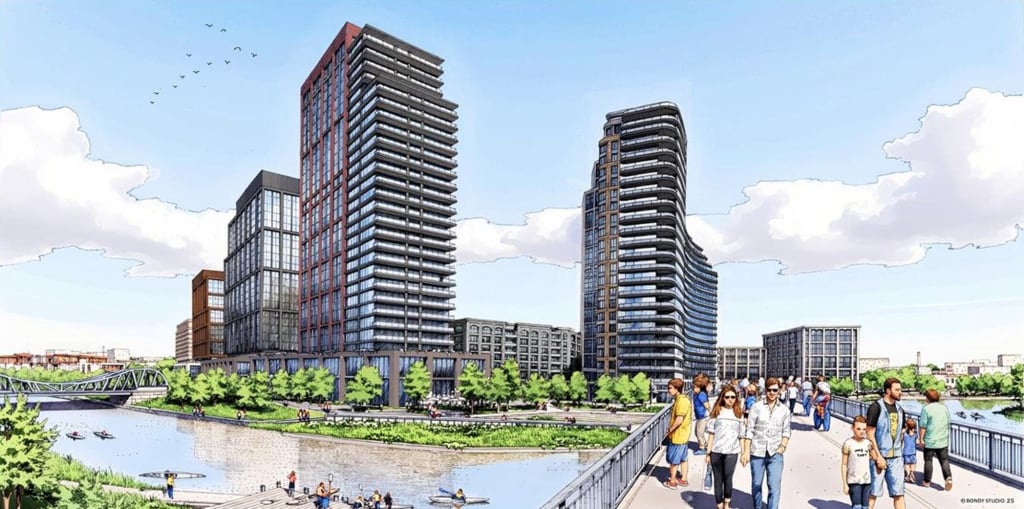
On September 22, 2026, Chicago's City Council Finance Committee approved a $201.6 million public subsidy for a 31-acre development along the Chicago River, the site once known as Lincoln Yards. Seven years earlier, the same land carried a $1.3 billion subsidy fight. This time it passed by voice vote.
A Vote Nobody Fought Over
That's remarkable, because seven years ago, this exact stretch of land was the site of one of the most contentious votes in recent Chicago history.
In 2019, Alderman Brian Hopkins helped push a $1.3 billion subsidy through City Council for the same property, then known as Lincoln Yards. That fight dragged on for months, drew vehement objections from progressive groups, and made a name for a union organizer named Brandon Johnson, who helped lead the opposition. Lincoln Yards collapsed anyway. Sterling Bay built exactly one building, a life sciences center that never found a tenant, before the pandemic and rising interest rates finished the job.
This time, the subsidy is $201.6 million instead of $1.3 billion. About 15 cents on the dollar. And it passed by voice vote.
What's Actually Being Approved
The project now goes by Foundry Park, a rebrand from JDL Development and Kayne Anderson Real Estate that honors the site's history as home to the A. Finkl & Sons steel plant. Here's what's on the table:
The scale:
• More than 3,700 homes, spanning apartments, townhouses, and single-family houses
• A hotel, roughly 970,000 square feet of office, retail, and restaurant space
• New riverfront parkland and a Riverwalk extension
• A 777-space underground parking garage
• Total project cost estimated at $3 billion, built out over roughly a decade
The money:
• $235 million in total infrastructure costs, split between JDL/Kayne Anderson (about $33 million out of pocket) and the city's $201.6 million TIF subsidy
• $71 million of the public share for new roads and utilities
• $69 million for new parks
• $33.5 million for Riverwalk expansion
• $21.5 million to extend the 606's Bloomingdale Trail across the river
The timeline:
• Zoning approved by City Council in February 2026
• TIF subsidy framework approved by the Community Development Commission in June 2026
• Finance Committee and full Council approval in September 2026
• Phase One construction expected to begin before the end of this year
• Full buildout not expected before 2034
The Alderman Who Built the Old Deal Signed Off on the New One
Here's the detail that makes this story worth telling: Brian Hopkins, the same alderman who helped pass the original $1.3 billion Lincoln Yards subsidy, ultimately supported this much smaller successor. He lost the ward containing the site to Alderman Scott Waguespack in redistricting, so it wasn't even his vote to give in any formal sense. But he weighed in anyway, extracting a pledge from city officials that the infrastructure improvements promised to his former constituents under the original Lincoln Yards plan, including a second river bridge crossing and an Elston Avenue realignment, would still eventually get delivered, even though neither is funded in this deal.
"We have time to fix this," Hopkins said, pointing to the project's ten-year build-out.
Meanwhile, Mayor Brandon Johnson, who cut his political teeth helping the Chicago Teachers Union turn the original Lincoln Yards subsidy into a citywide political fight, is now the mayor who introduced its replacement.
Not everyone let the deal through quietly. Representatives from Unite Here Local 1 pushed the Finance Committee to withhold approval until there was a guaranteed union jobs commitment at the roughly 200,000-square-foot hotel planned for the site. JDL's Jim Letchinger told the committee he's "a strong believer in Chicago unions" but couldn't make firm commitments because no hotel operator has been chosen yet. "Once we get it financed, discussions can take place," he said.
The Other Half of the Old Site Is Still a Mystery
Foundry Park only covers the northern 31 acres of what Sterling Bay originally split into two parcels. The southern half belongs to Chicago-based Novak Construction, which has announced nothing about its plans. What Novak has done is quietly acquire additional nearby land that once belonged to Sterling Bay, expanding its footprint without saying why. For now, Foundry Park is the only half of the old Lincoln Yards site with an actual construction date. Whatever Novak eventually proposes will likely be shaped by how this one performs first.
This Isn't an Isolated Deal
Foundry Park moved through City Council the same summer as another major TIF subsidy: $425 million for infrastructure around Chicago Fire FC's new stadium at The 78, downtown. Mayor Johnson introduced both subsidies within days of each other in July. Both use the same basic mechanism, capturing future property tax growth to fund public infrastructure around a stalled or ambitious megaproject. Both drew objections from alderpeople whose own wards' TIF districts were tapped to help fund a project elsewhere. Two data points aren't a trend on their own, but they suggest a pattern: rather than one blockbuster subsidy the way Emanuel approached Lincoln Yards, this administration is spreading smaller, developer-matched packages across multiple stalled sites at once.
What Chicago Is Betting the Money Will Return
TIF districts capture the growth in property tax revenue within a designated area, here for 23 years, and reinvest it locally rather than sending it to the city's general fund. City officials are projecting:
• $30.5 million in new property tax revenue by 2031, when Phase One is scheduled to finish
• $68 million annually by 2036, once the full buildout is complete
• Roughly 700 construction jobs a year for the next decade
• About 2,500 permanent jobs once finished
Those are the city's own projections, not an independent forecast, and they assume a decade of uninterrupted construction on a site with a documented history of falling apart.
The Bottom Line
Lincoln Yards died because a $1.3 billion promise met a pandemic and years of empty land nobody could quite explain. Foundry Park is a smaller, quieter bet: less public money, real developer skin in the game, and a subsidy that passed without a single roll call vote. Whether it succeeds where the loud, expensive version failed won't be clear for years, and what happens on the southern half of the old site will likely depend on the answer. For now, there's something on the calendar that Lincoln Yards never had: an actual construction start date, and a decade-long clock that's already running.
Why This Matters for Bucktown and Lincoln Park
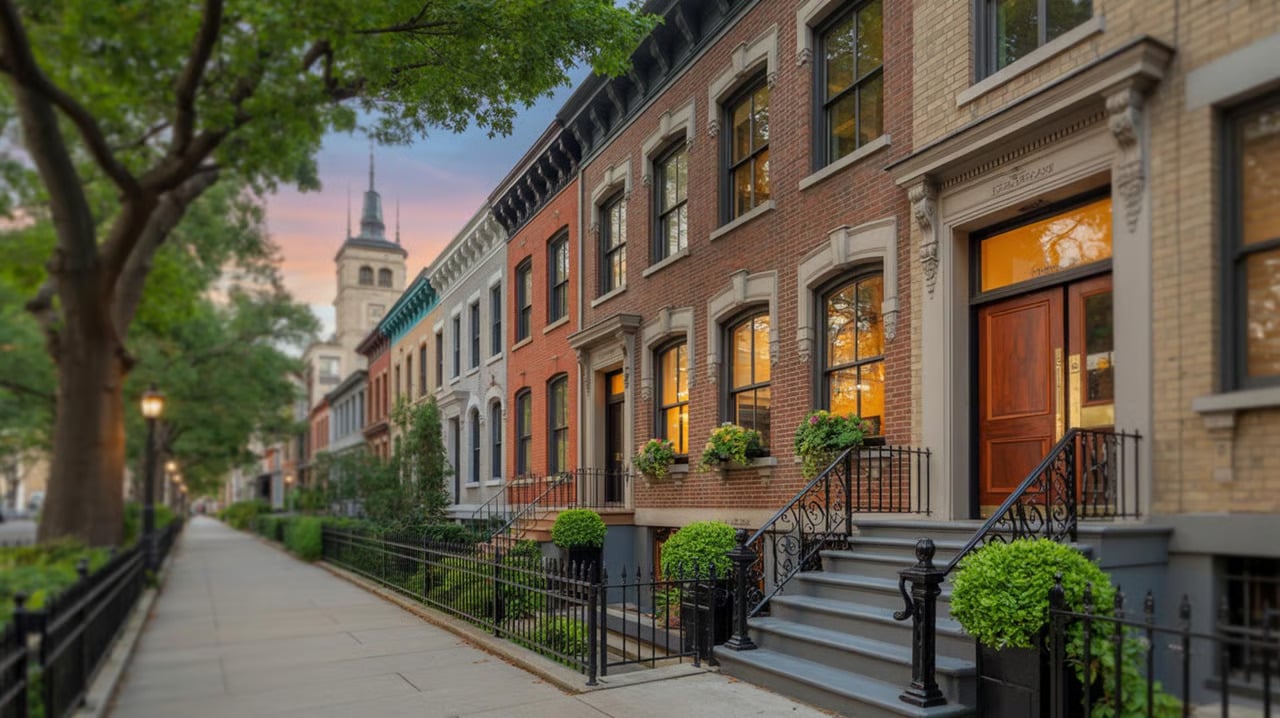
Foundry Park is landing in neighborhoods where new supply is genuinely scarce. Recent data puts Lincoln Park's median sale price somewhere between $700,000 and $930,000 depending on the source and month, with homes routinely selling above asking. Bucktown runs in a similar range, generally high $500,000s to $700,000, with tight inventory keeping the market firm even where individual reports show some softening. Local market analysts have described both neighborhoods as facing limited upside from new construction simply because there's almost no land left to build on. That's what makes a 31-acre site with 3,700 planned homes unusual here.
For buyers and investors, Foundry Park is now a real, dated addition to the housing pipeline in two neighborhoods that otherwise add supply one lot or teardown at a time, not a stalled promise the way Lincoln Yards was for years. Full buildout runs through 2034, so it's a long-term factor rather than something that changes the market tomorrow, but in neighborhoods this supply-constrained, a confirmed 3,700-home development is worth building into any multi-year plan. For current owners near the site, it means roughly a decade of phased construction activity along the riverfront, a tradeoff worth weighing against the long-term upside of a transformed, park-and-riverwalk-anchored neighborhood next door.
If you're curious how Foundry Park's construction timeline could affect buying, selling, or investing near Bucktown or Lincoln Park, connect with us for guidance on what is happening in the market right now.